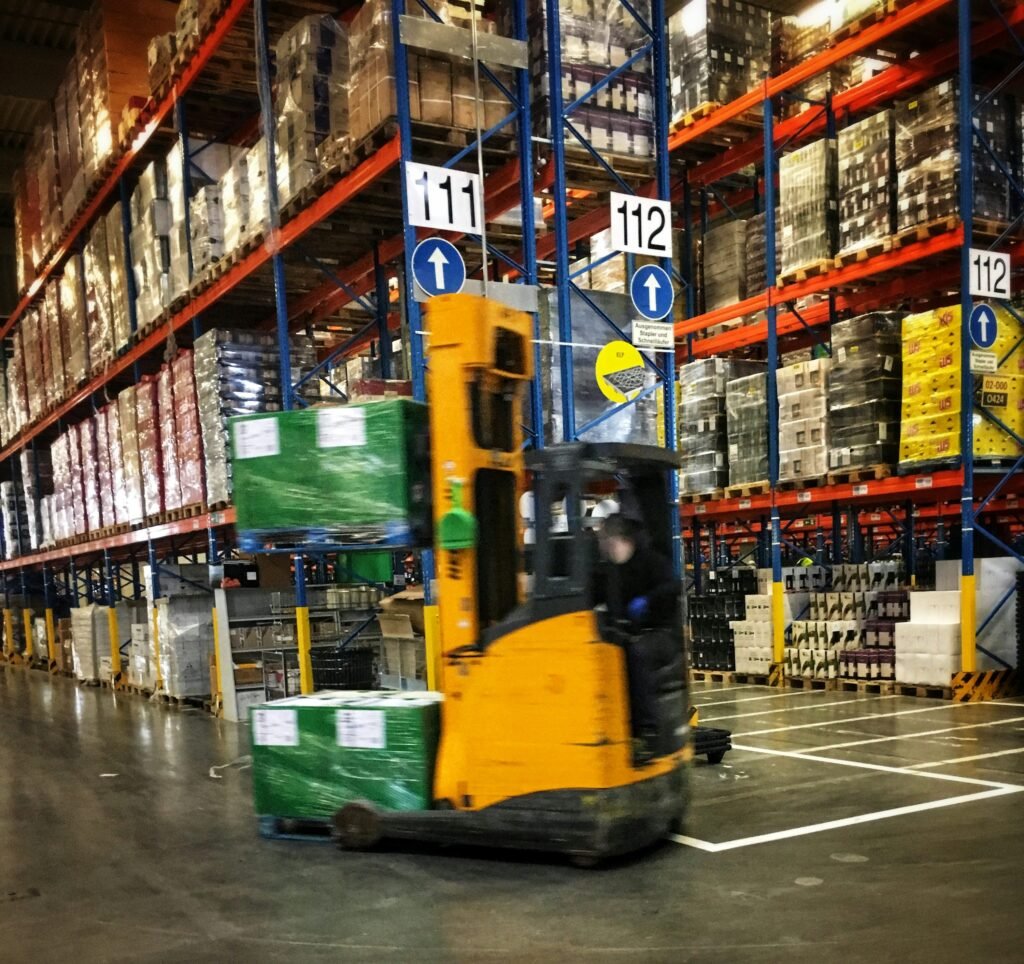
A pallet load is easiest to handle when the cartons and the pallet footprint work together. Two common problems sit at opposite ends of the spectrum: overhang, where cartons extend beyond the pallet edge, and underhang, where the load footprint is noticeably smaller than the pallet.
Both can waste money, but overhang is usually the bigger damage risk.
What pallet overhang is
Overhang occurs when cartons project beyond the pallet deck. That exposes carton edges and corners to impacts from forklifts, adjacent pallets, trailer walls and warehouse equipment. It also removes some of the vertical support beneath the box.
DHL Global Forwarding specifically advises that boxes should not overhang the pallet edge and notes that overhang can reduce individual box strength by more than 30%.
What pallet underhang is
Underhang means the load sits inside the pallet perimeter with unused deck space around it. A small amount is not automatically a problem and can protect carton edges, but excessive underhang reduces pallet utilization. You may ship fewer cartons per pallet, use more pallets, consume more trailer or container positions and raise handling cost.
| Condition | Main risk | Typical cost effect |
|---|---|---|
| Overhang | Corner damage, lost compression strength, unstable loads | Damage, claims, rework, possible measurement issues |
| Minor underhang | Usually low risk | Small cube penalty |
| Excessive underhang | Poor pallet utilization | More pallets and freight space per unit |
| Flush footprint | Best use of deck when stable | Good balance of support and utilization |
Why overhang weakens corrugated boxes
Corrugated cartons carry stacking load primarily through their vertical edges and corners. When a box edge hangs outside the pallet, the deck no longer supports that portion of the carton. The unsupported wall can deform, and the top load is transferred through a weaker path.
The problem gets worse when several pallet layers repeat the same overhang. The load may look square from a distance but the bottom cartons are carrying compression through partially unsupported edges.
Worked example: 48 × 40 pallet
Suppose a carton is 25 × 20 in and the warehouse places two cartons across a 48 × 40 in pallet. If the arrangement creates a 50 in footprint on the 48 in dimension, the load overhangs by 1 in on each side. That seems small, but it exposes both edges and makes the published pallet dimensions inaccurate.
Now compare a carton arrangement that uses only 42 × 34 in of the deck. That avoids overhang but uses about 74% of the pallet floor area. If the order volume is large, the underhang can translate into many extra pallet positions.
Use the Pallet Calculator and Cartons Per Pallet Calculator to test orientations before standardizing a carton size.
Overhang can also distort freight dimensions
For LTL and other freight rating, the shipment should be described using its maximum outside dimensions. If cartons extend beyond the pallet, the freight footprint is larger than the nominal pallet size. Using “48 × 40” on paperwork when the actual load measures 50 × 42 creates a mismatch that can contribute to remeasurement or reclassification.
When underhang is acceptable
Underhang can be intentional when the product needs a buffer from pallet edges, when carton sizes do not tile the deck perfectly, or when the load must fit a particular rack or handling process. The key is to quantify the tradeoff. A small protected border may be worth it; a pallet that is half empty usually signals a carton or pattern problem.
How to reduce overhang without sacrificing utilization
- Test carton rotation. A 90-degree orientation change can eliminate overhang.
- Change cartons, not pallets, first. A slightly different master carton may tile a standard pallet much better.
- Use mixed patterns carefully. Pinwheel or mixed orientations can improve deck fill, but must remain stable.
- Control layer alignment. Cartons can drift during manual pallet building.
- Measure the wrapped load. Stretch wrap, corner boards or bulging cartons can increase the final footprint.
PackToolbox pallet audit
- Measure actual carton outside dimensions.
- Record the pallet deck size.
- Calculate cartons per layer in at least two orientations.
- Check for overhang on every side.
- Check pallet stack height and total weight.
- Photograph the final wrapped load for high-value lanes.
Frequently asked questions
Is one inch of pallet overhang acceptable?
It should not be treated as harmless by default. Even small overhang exposes the carton edge and increases the true shipment footprint. Whether a specific load remains safe depends on carton strength, product rigidity and handling conditions.
Is underhang always wasted space?
No. Some underhang can protect the load and may be unavoidable. The issue is excessive unused deck area that forces additional pallet positions without adding protection value.
Should cartons always be flush with the pallet edge?
Flush loading is often a strong target, but stability, product protection and receiver requirements also matter. The safest pattern is the one that supports cartons fully and remains stable through the actual transport cycle.
Sources
PackToolbox guides are built around stated formulas, practical examples and source checks for changeable carrier, freight and logistics rules. Calculators are planning aids; final requirements should be verified with the relevant carrier or service provider.