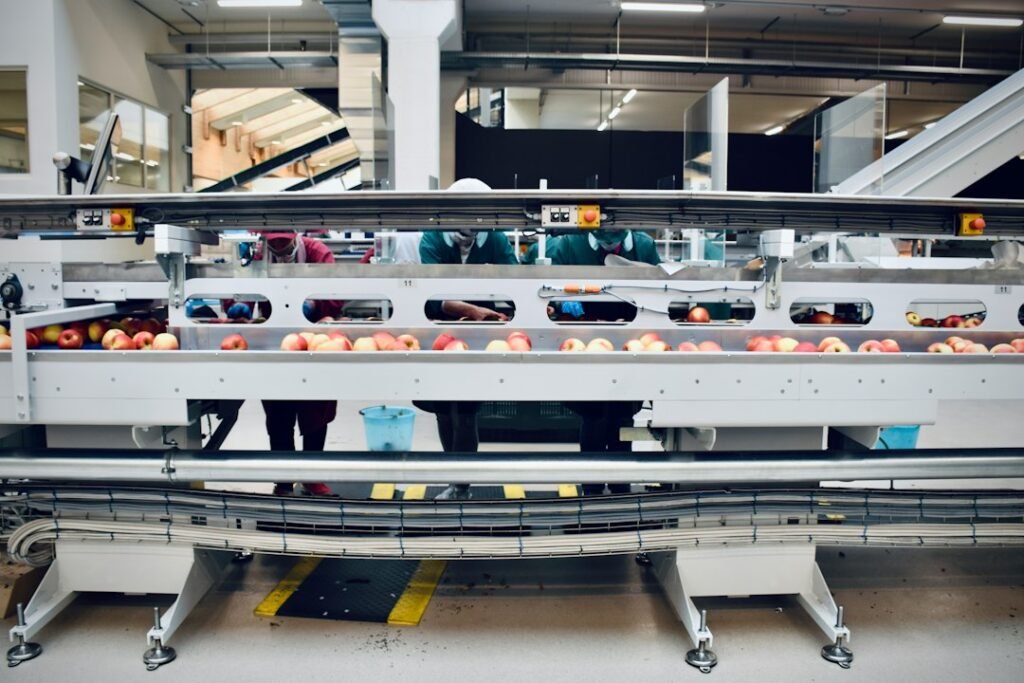
static vs in-motion parcel dimensioners is fundamentally a throughput and workflow decision. Static systems measure an item or package at a controlled station, while in-motion systems capture dimensions as parcels move through automated material handling.
In-motion technology is not automatically better. If package volume is moderate and operators already touch each parcel, a static station can be simpler and less expensive to integrate.
Static vs in-motion at a glance
| Factor | Static | In-motion |
|---|---|---|
| Throughput | Operator or station limited | Designed for conveyor volume |
| Integration | Workstation/WMS/shipping station | Conveyor controls, scanners, scales and host systems |
| Capital complexity | Usually lower | Usually higher |
| Best fit | Receiving, master data, moderate shipping stations | High-volume automated sortation/shipping |
Throughput should be measured at peak
Use peak-hour parcels rather than daily average. FreightSnap publishes in-motion parcel capability for demanding workloads and states speeds up to 60 packages per minute on one current solution. Cubiscan also offers multiple in-motion systems with different measurement envelopes.
The useful number is not vendor maximum speed alone. Measure spacing, barcode-read rate, exception handling and downstream conveyor capacity.
Static systems can be operationally elegant
For receiving and item-master-data workflows, operators may already pause to scan a barcode and inspect the product. A static dimensioner can capture dimensions and weight during that touch without introducing conveyor complexity.
See our parcel dimensioner buying guide for a broader requirements checklist.
Build ROI from the bottleneck
If manual measurement slows a shipping line, quantify labor minutes and correction cost. If conveyor throughput is already constrained elsewhere, an expensive in-motion dimensioner may not increase total output.
Use the dimensioner ROI and payback guide to compare investment with annual savings.
Buying checklist
- Measure peak parcels per minute or hour.
- Map where the package already stops today.
- Test irregular and noncuboidal packages.
- Include conveyor controls and integration in project cost.
- Model exception handling, not only straight-through throughput.
Frequently asked questions
When do I need an in-motion dimensioner?
Usually when parcel volume and automation justify measuring without stopping the conveyor.
Are static dimensioners more accurate?
Accuracy depends on the specific system and operating conditions; controlled measurement can simplify some workflows.
Can in-motion systems weigh parcels too?
Many solutions can integrate scales, but verify the exact configuration and certification requirements.
Which has faster payback?
The system that removes the most expensive real bottleneck can pay back faster, regardless of technology type.
Vendor references
Review current in-motion and static systems from Cubiscan and FreightSnap.
PackToolbox guides are built around stated formulas, practical examples and source checks for changeable carrier, freight and logistics rules. Calculators are planning aids; final requirements should be verified with the relevant carrier or service provider.